Paris-La: new magazine, new website
Category: ART

I AM SAD LEYLA (ÜZGÜNÜM LEYLA)

August 16th, 2010 — 1:22pm

Lisson Gallery is pleased to announce their collaboration with Hussein Chalayan to create a new installation to be exhibited during a solo show, 8 September – 2 October 2010.


toppromo.HC-Sertab

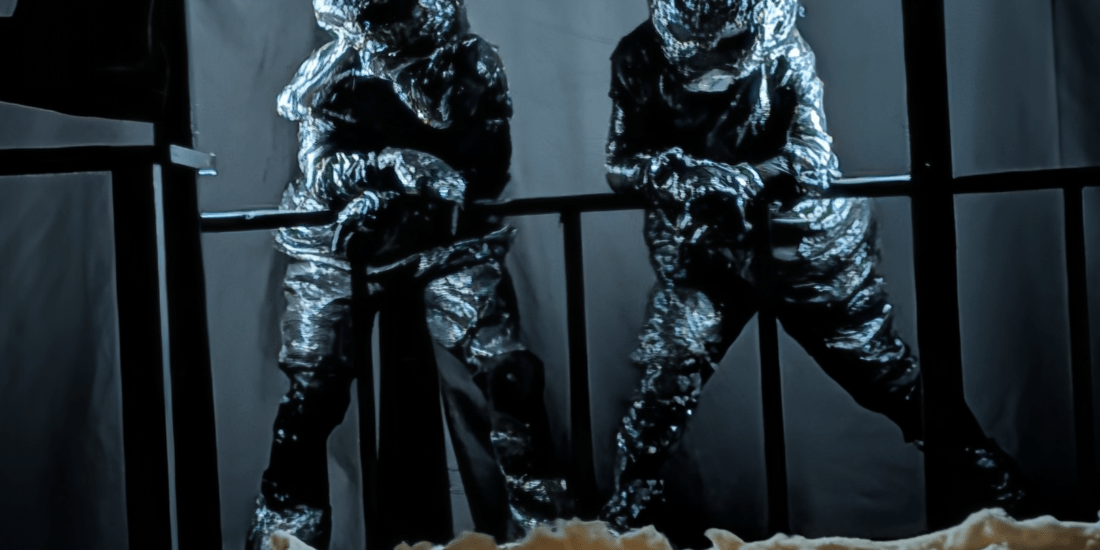
A film still from Hussein Chalayan’s “I Am Sad Leyla (Üzgünüm Leyla)” 2010. Courtesy the artist and Lisson Gallery.


Press release:

Chalayan says “My approach has always been interdisciplinary; the new work is an extension of this. There is a certain freedom to working in an art context that has allowed me to further explore the ideas that underpin my work”.


Chalayan has always been led by ideas, from his degree show at Central Saint Martin’s in 1993 to his catwalk presentation with thematic underpinnings, including his powerful meditation on migration in the show Afterwords in 2000, and his visceral recycling of fashion history in Manifest Destiny in 2003.


Both the new installation and an accompanying film piece centre on ideas which have continually fascinated the designer including cultural identity and performance as an art form. Chalayan’s pioneering approach and restless creativity means that he frequently transcends the boundaries between disciplines and this project is no different, drawing on themes from the fields of art, anthropology, music and design. In the exhibition Chalayan explores the concept of what constitutes both an art work and a garment while combining his characteristic elements of cultural acuity and performative panache.


1side.HC-0733p

Sertab Erener performing Chalayan’s “I Am Sad Leyla (Üzgünüm Leyla)” 2010. Courtesy the artist and Lisson Gallery.


The new installation explores music as a cultural form, creating a “disembodied experience” of a performance of a traditional Turkish folk composition by Sertab Erener, one of Turkey’s most successful female singers, accompanied by an Ottoman orchestra. The installation is made up of a nuanced combination of audio, film, sculpture and musical notation. Here Hussein examines the experience of music as layered, exploring both the sounds created by different instruments, and the diverse cultural influences on the composition, which include Persian poetry and Greek orthodox chanting.


Hussein Chalayan is one of Britain’s best known and most respected designers, and was the recipient of the Designer of the Year awards in 1999 and 2000. Chalayan represented Turkey in the Venice Biennale in 2005 and presented a critically acclaimed survey at London’s Design Museum in spring 2009, which later toured to the Museum of Contemporary Art in Tokyo and is currently on view at Istanbul Modern.


The project has emerged from a longstanding dialogue between the designer and Lisson Gallery’s Curatorial Director Greg Hilty who says: “Hussein Chalayan is rightly celebrated not just for his fashion but as one of London’s leading innovators in visual culture. His sensitive play with the history and poetic potential of wide-ranging cultural forms make him a natural fit for Lisson’s programme of exhibitions.”


2side.IMG_2515

Another film still from Hussein Chalayan’s “I Am Sad Leyla (Üzgünüm Leyla),” 2010. Courtesy the artist and Lisson Gallery.


Comment » | ART

ART UNLIMITED | ART PUBLIC

June 22nd, 2010 — 8:56am

Art Basel closed its doors the night before last, and Paris, LA happily saved a tiny selection of works that featured at Art Unlimited and Art Public. These are pieces that we like mostly for their aesthetic appearances but also the idea enclosed in each. We also love the resonance of their titles: Romance; Frontier; Pipeline Field; Solo; Fields; Dad. It somehow sums up the feelings that circulated in the air during the fair this year. Something close to a humble attitude mixed with a minimal look. Something that left plenty of space for the work to speak sharply, and finally took over the circus of a fair.


IMG00252-20100615-1704

JACK PIERSON, Romance, 2009. Courtesy the artist and Galleria Christian Stein, Milano.


IMG00253-20100615-1707

DOUG AITKEN, Frontier, 2009. Courtesy the artist and 303 Gallery, New York.


IMG00258-20100615-1720

MICHAEL BEUTLER, Pipeline Field, 2010. Courstesy the artist and Galerie Christian Nagel, Köln.


IMG00261-20100615-1721

MICHAEL BEUTLER, Pipeline Field, 2010 (detail). Courstesy the artist and Galerie Christian Nagel, Köln.


IMG00270-20100615-1745

CHRISTIAN MARCLAY, Solo, 2008. Courtesy the artist and White Cube, London.


IMG00274-20100615-2053

AI WEIWEI, Fields, 2010. Courtesy the artist and Galerie Urs Meile, Beijing, Luzern.


IMG00277-20100615-2054

AI WEIWEI, Fields, 2010 (detail). Courtesy the artist and Galerie Urs Meile, Beijing, Luzern.


IMG00281-20100615-2056

OSCAR TUAZON, Dad, 2010. Courtesy the artist, BaliceHertling, Paris; and Standard, Olso.


All photography © dp for PARIS, LA.


Comment » | ART

BOOK LAUNCH OF “I CAN’T SEE” AT ART BASEL 41

June 14th, 2010 — 3:09pm

Do.Pe. Press is happy to announce the book launch of


OSCAR TUAZON, I CAN’T SEE


on June 16, 6pm to 8pm, Art Basel 41, on Standard (OSLO) booth R7


IMG00220-20100612-1951


IMG00230-20100613-1316


IMG00233-20100613-1316


I think with my hands, I think of my hand as a man. Sort of a man, short of a man. A man and a half. Half a man, half a hand. I give myself a hand. I can’t remember ever wanting to be anything. If I ever wanted anything. If I ever wanted anything I got it, but I never wanted it. I use my body for something, I use it to make something, I make something with my body, whatever that is. I make something and I pay for it and I get paid for it. I get laid for it. I get something out of it, I put something into it and I get something out of it, I get out of it. I sweat it out. I stick it out, I spit it out, I put something into my body then I spit it out. I want to put something inside my body and carry something in it. I want to get inside my body and get carried in it, I’d like to get buried in it, put my head in it and get in it, I’m not scared of it. I’m walking as I write this.


Working. That’s why I’m here: I’m here to work. I came here to work. They needed another body on it and so I got on it. I walked up to get some work. I walk to work. I came up here to get some work. I climbed up a sheet and stood on it. That’s what I’m paid to do so I do it. Whatever else it is I do is my business, as long as I do the job, and I do do the job. Walk out till the road ends, then walk till I can’t see it, then walk till I can’t talk, then stop. I can’t talk. I’m the one who has to do that, I’m the one to do it so I do it. I don’t have a say in it, they pay for it and I stay at it. I’m the one paid to do it, I’m the one who stayed to do it, I stayed and did it, they paid and quit it. Someone else could do it if they’re paid to do it, but who else would do it? I knew what I had to do so I do it, just stay true to it and try to get through it.


— Oscar Tuazon, excerpt from My Flesh To Your Bare Bones, 2010


OT-front

Oscar Tuazon, I Can’t See

Do.Pe. Press, Paraguay Press

June 2010, English, Edition of 2.000

Softcover, 272 pages, 24 x 32 cm

Silkscreen cover, color ill.

ISBN 9782918282054


This publication is the first monograph of American artist Oscar Tuazon. It accompanies the exhibition Bend It Till It Breaks, organized by Chiara Parisi and presented at Le Centre international d’art et du paysage de l’île de Vassivière (Ciap), November 15, 2009-February 14, 2010; Oscar Tuazon, organized by Philippe Pirotte and presented at Kunsthalle Bern, February 13-April 25, 2010; and the exhibition with Elias Hansen, It Was One of my Best Comes, organized by Sandra Patron and presented at Parc Saint Léger – Centre d’art contemporain, March 20 – June 6, 2010.


Edited by Oscar Tuazon, Thomas Boutoux, Pierre François Letué, and Dorothée Perret.


With contribution texts of Ariana Reines, Matthew Stadler, Cedar Sigo, Karl Holmqvist, Thomas Boutoux, Carissa Rodriguez, Eileen Myles, David Lewis.


Featuring a conversation (English/German/French) between Oscar Tuazon, Sandra Patron from Parc Saint Léger – centre d’art contemporain, Chiara Parisi from Centre international d’art et du paysage de l’île de Vassivière, and Philippe Pirotte from Kunsthalle Bern.


Further info send an email to  dopepress@gmail.com

Comment » | ART

BEAM DROP

May 23rd, 2010 — 10:33pm


This movie shows the artist Chis Burden creating the piece “Beam Drop” in Brasil, at Centro de Arte Contemprânea Inhotim. What is so beautiful and so moving is that it features all the ingredients of a masterpiece: the veracity, the danger,  add the fun and the unpredictability of a live performance. Finally watching “Beam Drop” provides the happy feeling of being alive. And after all isn’t it what art is about? A simple pleasure!

Comment » | ART

McCARTHY AT FONDAZIONE NICOLA TRUSSARDI

May 14th, 2010 — 12:20pm

From May 20 to July 4, 2010, Fondazione Nicola Trussardi presents Pig Island, the first major solo show in an Italian institution by Paul McCarthy.


Fondazione Nicola Trussardi has invited the legendary American artist Paul McCarthy to conceive a project for Palazzo Citterio—one of the most unusual places in the city of Milan, located right in the city’s historical center on Via Brera, yet unknown to the public, as it has been closed for over 25 years, reopened thanks to the collaboration of Soprintendenza per i Beni Architettonici e per il Paesaggio di Milano. This exhibition will premiere the monumental masterpiece on which McCarthy has been working for over seven years: Pig Island.


2010_FNT_PMC_Pig-Island_IMG_1506_web

Paul McCarthy, Pig Island, 2003-2010 (detail). Courtesy the artist and Hauser & Wirt.


Paul McCarthy is a true contemporary master who has achieved a key role in art history over his decades-long career. Combining minimalism and performance, Walt Disney and George W. Bush, McCarthy has used the human body, with all its desires and taboos, to create a unique, irreverent, and satirical language that combines Pop Art with fairy tales, the nightmares of the daily news with universal archetypes.


McCarthy’s videos, performances, installations and sculptures transport visitors to a universe that combines Hollywood glamour with the dark side of the American dream.


Pirates, clowns, Santa Claus puppets, home-made avatars, and mutant monsters populate McCarthy’s theater. Ketchup bottles, cans of food, mechanized pigs and cast body parts pop up in his exhibitions like the remnants of some bad dream. McCarthy’s shows are conceived as giant theme parks that stage raving bacchanals. Like a circus ringmaster, McCarthy constructs exhibitions in which celebrities impersonators interpret deranged parodies of movies, or in which Mickey Mouse and Snow White are caught in bestial acts of regression.


For the exhibition with Fondazione Nicola Trussardi, Paul McCarthy presents one of his most complex and ambitious works, Pig Island, a giant sculpture that grew in the artist’s studio to fill over 100 square meters with a surreal anthology of the themes that have cropped up throughout his career. The installation Pig Island is a carnivalesque amusement park in which human beings behave like pigs. A treasure island in reverse, Pig Island is a sculptural shipwreck in which pirates and their heroines throw themselves with abandon into wild revels. The installation is a contemporary Raft of the Medusa: its characters can finally cast off their inhibitions and reveal their all-too-human nature. Pig Island is a work-in-progress that Paul McCarthy has been developing for over seven years, and which will make its world debut at Palazzo Citterio with Fondazione Nicola Trussardi.


28188_423166825201_138223615201_5794610_3110679_n

Paul McCarthy, Pig Island, 2003-2010. Mixed materials. Courtesy the artist and Hauser & Wirt.


The piece—accompanied by a selection of McCarthy’s work from 1970 to 2010—is installed in one of the few examples of contemporary architecture in Milan: still completely hidden to the public, and left in a state of disrepair, this building will be unveiled for the first time on this occasion.


The show explores an underground bunker carved out beneath the city, where one finds the archeological artifacts of a Never-Never-Land: Pig Island combines Paul McCarthy’s hypertrophic, Rabelaisian works with the rawness of a gigantic, endless work-in-progress.


Since the ’80s, Palazzo Citterio has been entirely closed to the public. The building, property of the Italian State, was originally conceived to house the extension of the Pinacoteca di Brera in a project known as Grande Brera. The Fondazione Nicola Trussardi show is a precious opportunity to discover the work of one of the greatest figures in contemporary art, presented in an extraordinary setting that has been left in its unfinished state.


With Pig Island, Fondazione Nicola Trussardi introduces the public to a new landmark space hidden away in the heart of the city; after the major solo shows by Michael Elmgreen & Ingar Dragset, Darren Almond, Maurizio Cattelan, John Bock, Urs Fischer, Anri Sala, Paola Pivi, Martin Creed, Pawel Althamer, Peter Fischli & David Weiss, Tino Sehgal and Tacita Dean, Fondazione Nicola Trussardi is proud to present one of the most ambitious projects it has undertaken since its foundation in 2003, when it set out to explore historic sites in Milan and infuse them with new life through the visions of contemporary art.


To help people discover all of its projects, the foundation has published the book What Good Is the Moon?, which presents brand-new articles, behind-the-scenes information, and texts by Beatrice Trussardi, Massimiliano Gioni, Daniel Birnbaum, Stefano Boeri, Tiziano Scarpa, Catherine Wood and Hans Urlich Obrist, among others, along with artist interviews and in-depth historical investigations, in 368 pages with over 450 illustrations. What Good Is the Moon? is a fundamental tool for discovering contemporary art through the projects of Fondazione Nicola Trussardi.


Comment » | ART

Back to top